Advanced Materials for Biomedical and Environmental Challenges (AMBEC–2024) is devoted to the discussion of crowning scientific achievements in recent years adopted in the fields of materials sciences with biomedical and environmental applications. It also aims to comprehensive coverage the experimental and theoretical breakthrough, identify the applicable areas of the most recent innovations, share experiences with leading academic scientists, and stimulate the scientific motivation of young researchers. AMBEC–2024 will present and cover the trends and concerns in interdisciplinary fields of Biology, Chemistry, Ecology and Material Science.
Apart from plenary and invited lectures, the international conference will include parallel sessions with oral and poster presentations by junior and senior researchers. Among the main goals of this event is to establish new research partnerships with national and international organizations to identify specific research areas. In essence, the conference will help lay the groundwork for a sustainable future to optimize education and research.
Official languages of the conference: Azerbaijan, English.
| Advanced bioactive compounds and materials | Synthesis and investigations of bioactive compounds and materials that have potential application in medicine and pharmacology |
| Green–oriented research | Research in areas ranging from agronomy and biotechnology to green chemistry and the process of creating safe and effective materials that are applicable to achieving sustainable development goals |
| Supramolecular materials and nano ensembles | Synthesis and study of various organic/inorganic and nano–based materials |
| Ethnobotany and ethnopharmacology | Investigating bioactive compounds originating from plants that can be used to treat or prevent a variety of infectious illnesses and metabolic disorders. |
| Advanced materials for the environment | Preparation and investigation of materials that ensure environmental security, rational use of natural resources, restoration, and protection of natural systems, ensuring environmental quality and sustainable socioeconomic development |
| № | Full name | Organization |
|---|---|---|
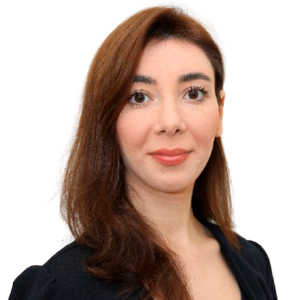
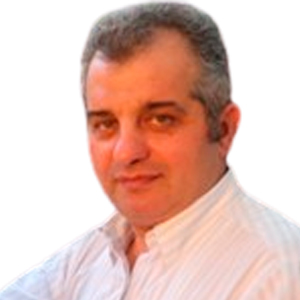
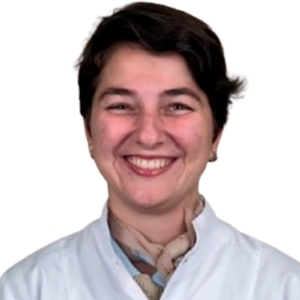
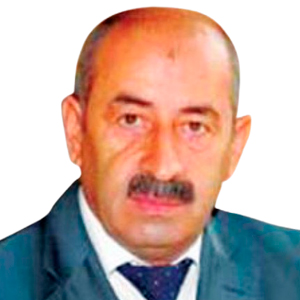
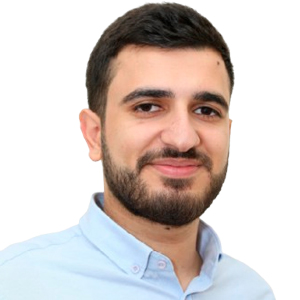
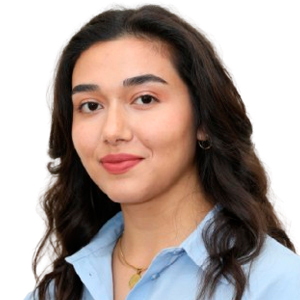
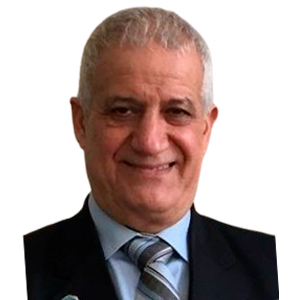
| 1 | Mais Suleymanov | Director of the organization of scientific activity and innovation center, BSU, Azerbaijan |
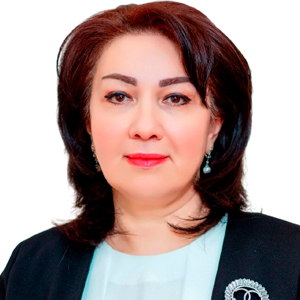
| 2 | Afat Mammadova | Dean of Biological Faculty, BSU, Azerbaijan |
| 3 | Rovshan Khalilov | Head of Biophysics and Biochemistry Department, BSU, Azerbaijan |
| 4 | Ulviyya Hasanova | Head of the Biomedical Materials Department of Biology Faculty, BSU, Azerbaijan |
| 5 | Aygun Israilova | PhD, ICESCO Biomedical Materials Chair, BSU, Azerbaijan |
| № | Full name | Organization |
|---|---|---|
| 6 | Nurlan Amrahov | PhD candidate, Molecular Biology and Biotechnology Department, BSU, Azerbaijan |
| 7 | Alakbar Huseynzada | PhD candidate, Head of 'Industrial Chemistry' research laboratory, BSU, Azerbaijan |
| 8 | Gunel Aliyeva | PhD candidate, Scientific researcher of 'Nanocenter' research laboratory, BSU, Azerbaijan |
| 9 | Alibala Aliyev | PhD candidate, Scientific researcher of 'Industrial Chemistry' research laboratory, BSU, Azerbaijan |
| 10 | Haci Vahid Akhundzada | PhD, Scientific researcher of 'Industrial Chemistry' research laboratory, BSU, Azerbaijan |
| № | Full name | Organization |
|---|---|---|
| 1 | Barish Uzilday | Professor at the Faculty of Science, Ege University, , Türkiye |
| 2 | Abdulsaid Azizov | Professor of the Department of Chemistry of High Molecular Compounds, Baku State University, Azerbaijan |
| 3 | Fiorella Meneghetti | Associate Professor, Faculty of Pharmacy, University of Milan, Italy |
| 4 | Fuad Karimli | Dean of the Faculty of Chemistry, Baku State University, Azerbaijan |
| 5 | Khudaverdi Ganbarov | Head of the Microbiology and Virology Research Laboratory of Baku State University, Azerbaijan |
| № | Full name | Organization |
|---|---|---|
| 6 | Koray Sayin | Professor at the Faculty of Science, Sivas Cumhuriyet University, , Türkiye |
| 7 | Milka Mileva | Professor, Institute of Microbiology, Academy of Sciences of the Republic of Bulgaria, Bulgaria |
| 8 | Mustafa Demiralp | Employee of the CUTAM Center of Sivas Cumhuriyet University, , Türkiye |
| 9 | Sevil Yucel | Professor, Faculty of Chemical and Metallurgical Engineering, Yıldız Technical University, Türkiye |
| 10 | Sevinj Hajiyeva | Head of the Department of Ecological Chemistry, Baku State University, Azerbaijan |
| 11 | Sholpan Abzhanova | Head of the Department of Biotechnology, Alma Ata Technological University, Kazakhstan |
Requirements:
ABSTRACT SUBMISSION & GENERAL GUIDELINES:
The abstract should be prepared in English.
Authors may submit more than one abstract.
The submitter accepts responsibility for the accuracy and scientific content of the submitted abstract.
Paper format: A4; File format: *doc, *docx; 11–point Calibri, single spaced.
Margins: top–2 cm, bottom–2.0 cm, left–2.0 cm, right–1 cm.
The name of abstract should be short (not more than 15 words), bold, with capital letters, 12–point, Calibri.
Full name of the author(s) (do not add titles and degrees): Bold, 12–point, Calibri.
Names of the organization(s), city, and country: Regular, italic, 12–point, Calibri.
E–mail: Regular, italic, 11–point, Calibri.
Abstracts should consist of minimum 300 words, maximum 500 words.>
References should be given according to the APA standard (Kappe, C. O., & Stadler, A. (2004). The Biginelli Dihydropyrimidine Synthesis. Organic reactions, 63, 1–116.)
The authors will be notified about acceptance/rejection of their abstracts via e–mail.
Accepted abstracts should be represented with oral presentation and/or poster presentation.
Participation type: in person or online.
In poster presentation each abstract should be structured in the following sections and contain (a) key words (contain 3–5 words in italic), (b) background with purpose, (c) a brief description of the methods used (should be given reference), (d) summarized results, (e) short conclusion.
After the presentation, participants will receive their certificates.
Only accepted abstracts will be published.
SUBMISSION ABSTRACT FORM
E-visas can be obtained at www.evisa.gov.az at least 3 (three) working days before their planned date of arrival in the Republic of Azerbaijan. Your e-Visa will be valid for 90 days. The e-visa fee is $25 USD, an urgent e-visa is $60 USD and is non-refundable.
The following nationalities can travel to Azerbaijan visa-free:
Azerbaijan’s unit of currency is the Azerbaijani manat (AZN). All major credit cards are accepted.
You may get acquainted with the up to date currency rates via the following link:
Central Bank of the Republic of Azerbaijan - AZN CurrenciesFrom Heydar Aliyev International Airport to Baku State University: 27.6km
Road to the city from Heydar Aliyev International Airport:
Express BusAeroexpress buses run from Terminal 1 and Terminal 2 to the Central Railway Station (Metro “28th May”). For more details: Click here
Airport TaxiOfficial Taxi: Baku Taxi Service LLC
Operation Area: Baku city and Absheron Peninsula Payment method: Cash and Debet/Credit cards.
You can order Official Taxi at Baku Taxi Service Desk located in Meet & Great Area in Terminal 1. For more details: Click here
Metro service operates between 06:00 and 00:00 Hrs. It costs 50 qapik to enter the metro. To use the metro, you should buy a BakiKart or BakiKart for limited use (BakiKart costs 2 AZN, BakiKart for limited use costs 0.5 AZN) card and charge it with as many trips as you wish. To get to Baku State University you need to go to Emler Akademiyasi (Elmlər Akademiyası) station via metro. For more details: Click here
Call 101.
Medical emergenciesCal 103.
PoliceCall 102.
Call 112 for the emergency hotline.
For English-speaking staff, call +944 12 590 9966.
More about Azerbaijan: Click here
Capital Baku (Bakı)
Population (2021 est.) 10,197,000
Form of Government unitary multiparty republic with a single legislative house (National Assembly [125])
Official Language Azerbaijanian
Main Religion (large majority) Islam
Official Name Azərbaycan Respublikası (Republic of Azerbaijan)
Total Area (sq km) 86,6002